Key takeaways
- Colorado's freeze-thaw cycles, road salt, and high-altitude UV are uniquely hard on floors.
- A polyaspartic topcoat resists salt, de-icer, and UV better than bare epoxy.
- Proper crack repair before coating prevents freeze-thaw damage from spreading.
- Flake adds slip resistance for wet, snowy boots and tires.
Colorado is a beautiful place to own a garage and a brutal one to own a garage floor. Between the freeze-thaw swings, the magnesium chloride and salt tracked in all winter, and the high-altitude UV pouring through the door, our floors take abuse that floors at sea level never see. Here is the system we build specifically for these conditions.
The three Colorado floor killers
1. Freeze-thaw cycling
Northern Colorado can swing from sub-freezing nights to sunny 50-degree afternoons in the same day. Water gets into concrete cracks, freezes, expands, and pries the crack wider — then melts and repeats. Over a winter, a small crack becomes a big one. That is why we repair and fill every crack and spall before coating, locking out water before the cycle can start.
2. Road salt and de-icer
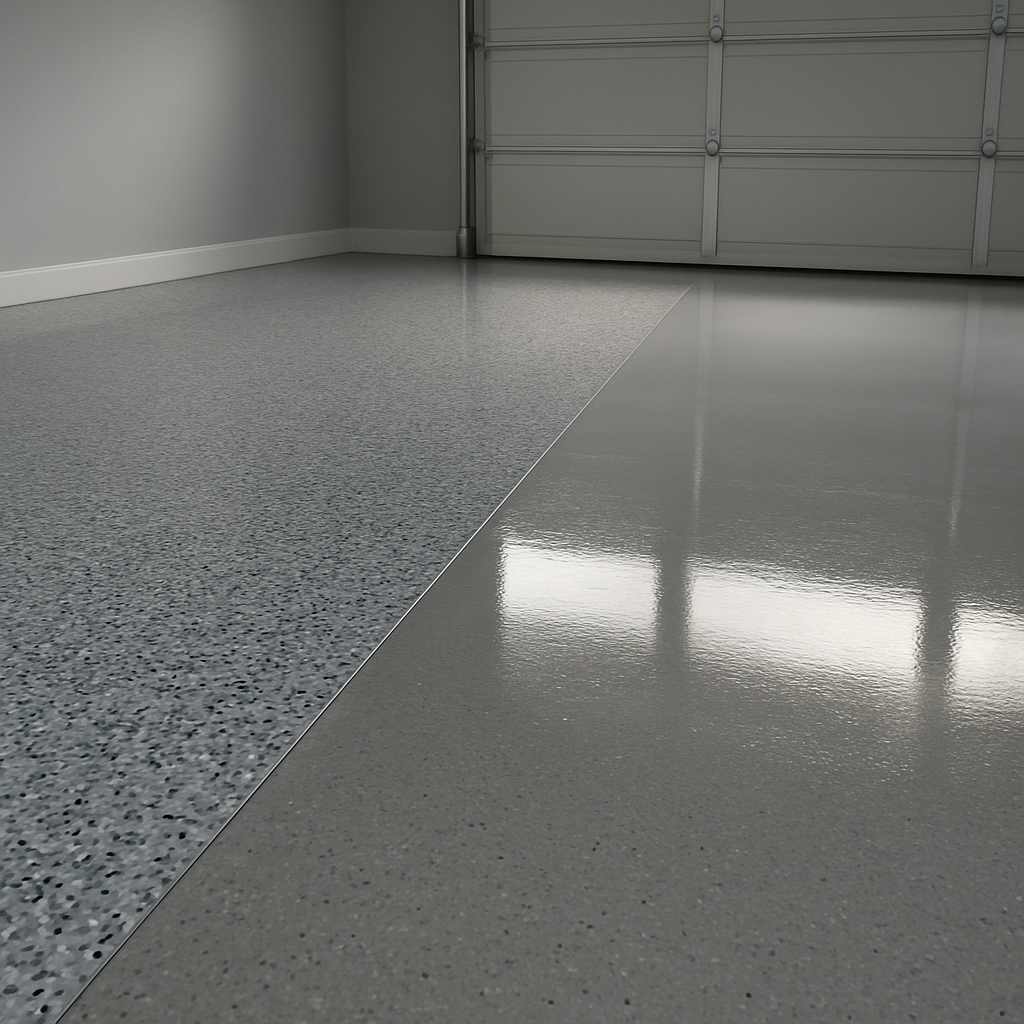
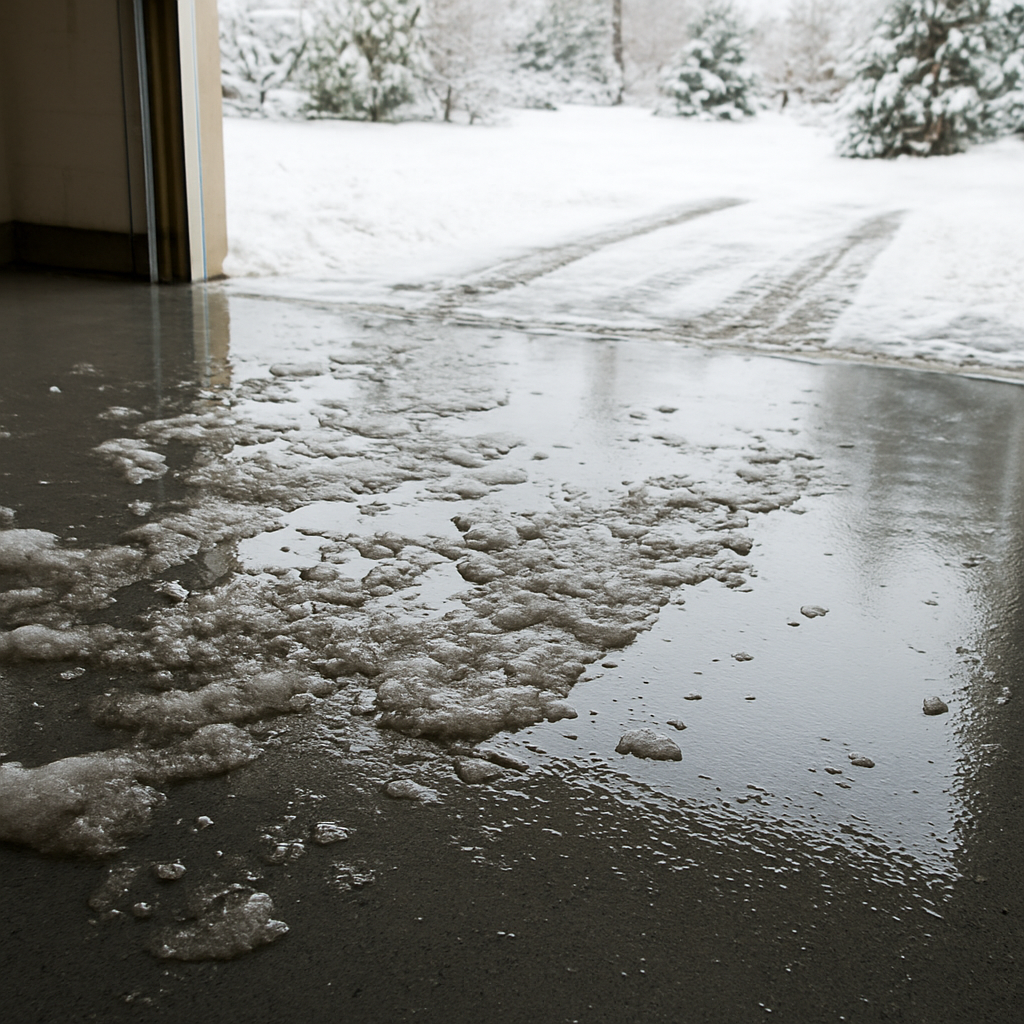
The slush your tires drag in is loaded with magnesium chloride and salt, which is corrosive and will pit and stain bare or poorly coated concrete. A sealed polyaspartic surface does not absorb any of it — the salt sits on top and rinses away, leaving the concrete underneath completely protected.
3. High-altitude UV
At Colorado's elevation, UV exposure is significantly stronger than at sea level, and a garage with a south- or west-facing door gets blasted with it. Non-UV-stable coatings amber and chalk under that exposure. A UV-stable polyaspartic topcoat keeps its clarity and color for the life of the floor.
The system we build for Colorado
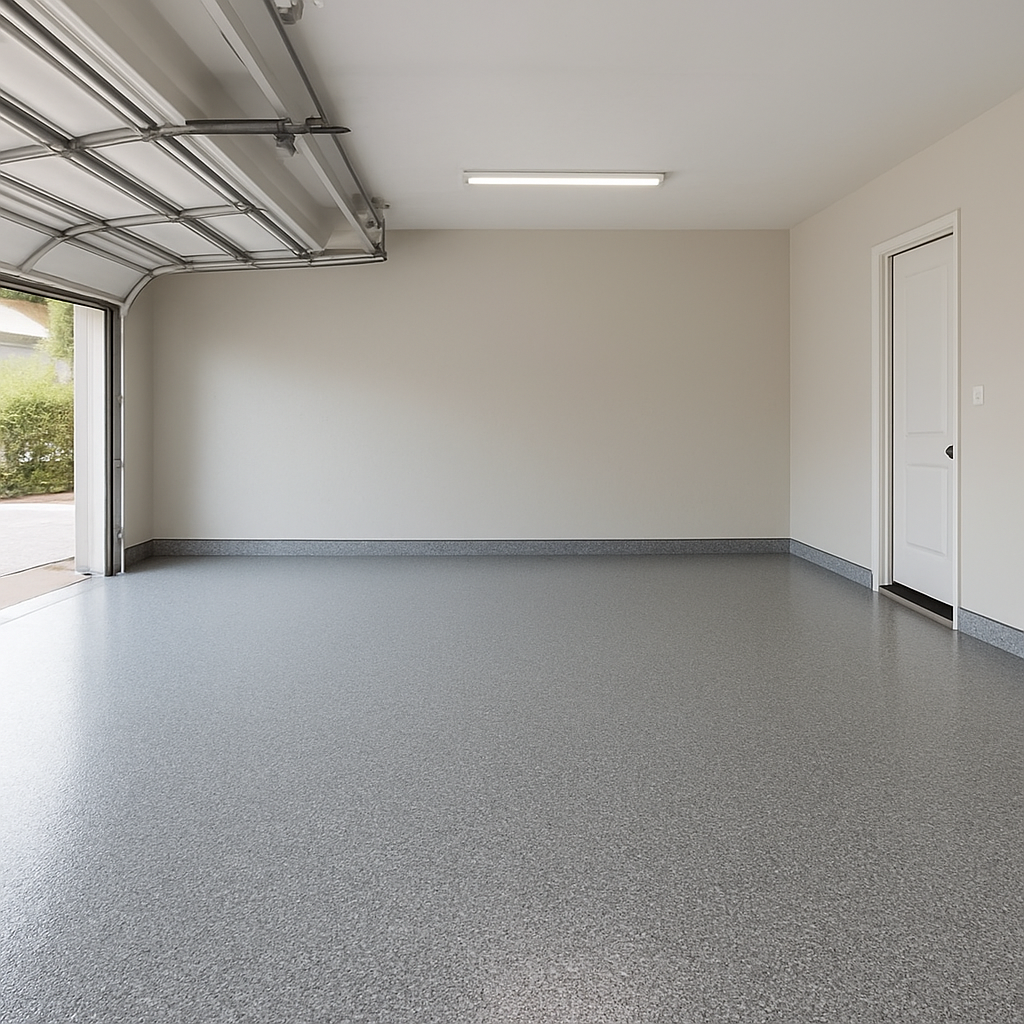
- 1Diamond-grind the slab and fully repair all cracks and spalls to stop freeze-thaw damage.
- 2Install a 100% solids epoxy base coat for a strong, moisture-tolerant bond.
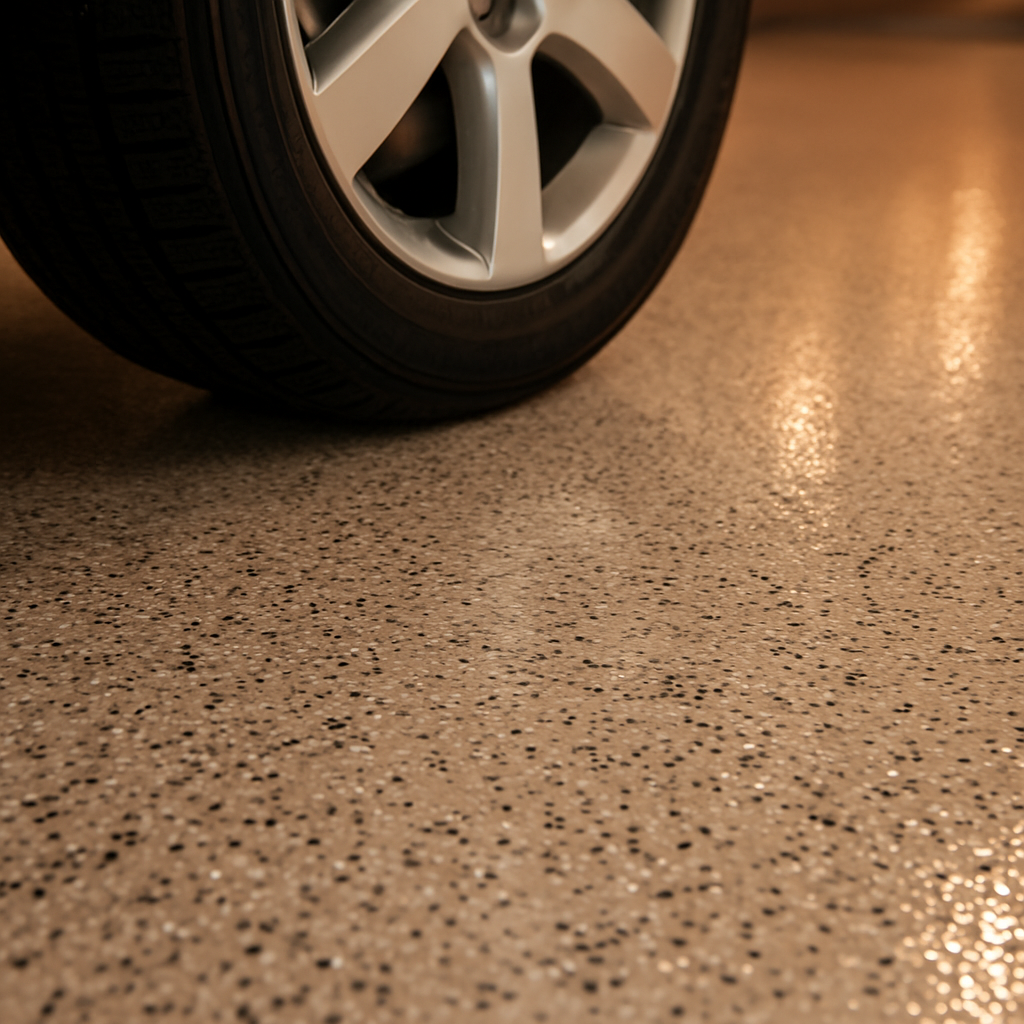
- 3Broadcast vinyl flake to full refusal for slip resistance on wet, snowy days.
- 4Seal with a UV-stable polyaspartic topcoat that shrugs off salt, de-icer, and sunlight.
The flake layer matters more than people expect in winter. Wet boots and snow-covered tires make a smooth floor slick; the texture from a full flake broadcast gives you grip exactly when you need it most.
If a coating can survive a Colorado winter, it can survive anything. That is the standard we build to.
Can you install in winter?
Yes. One of polyaspartic's biggest advantages is that it cures in a wide temperature range, including the cold. With a heated, controlled garage environment, we install floors year-round across Fort Collins, Loveland, Greeley, and the surrounding Front Range — winter included.
Frequently asked
What is the best garage floor coating for cold climates?
A full system with a UV-stable polyaspartic topcoat over an epoxy flake base is best for cold climates like Colorado. Polyaspartic resists road salt and de-icer, stays flexible through freeze-thaw cycles, and cures even in cold temperatures.
Does road salt damage epoxy floors?
Road salt and de-icer can pit and stain bare or poorly sealed concrete, but a properly installed polyaspartic-topped floor does not absorb it. The salt sits on the surface and rinses away without harming the floor.
Can garage floors be coated in winter?
Yes. Because polyaspartic cures in a wide temperature range, we install floors year-round in a heated, controlled garage environment across Northern Colorado.
Ready for a floor that lasts?
Free on-site estimate and a written quote within 24 hours.