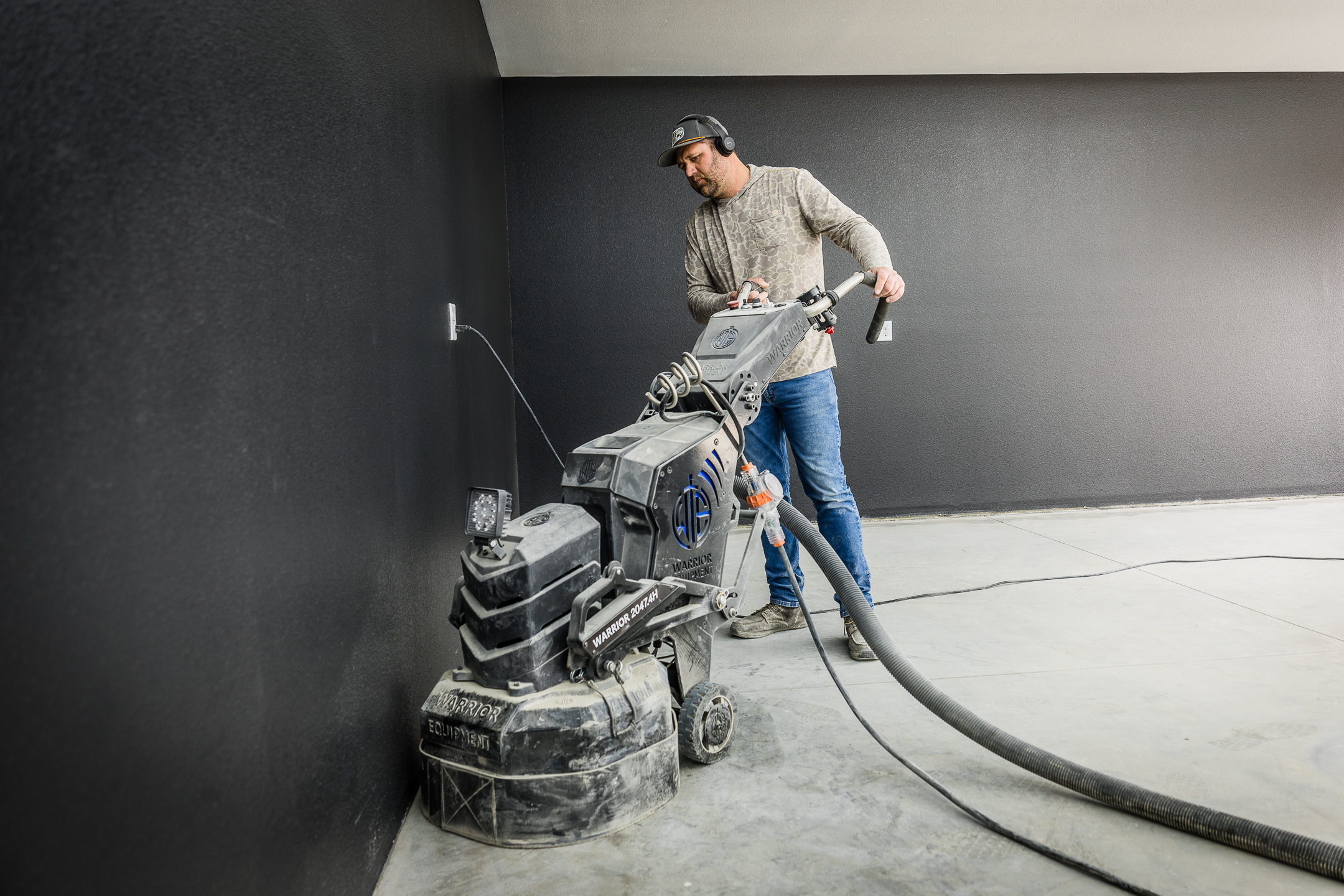
Polyaspartic Floor Coating
Polyaspartic is the toughest, fastest-curing system we install — a full polyaspartic build engineered for warehouses, fleet bays, and manufacturing floors that can't afford downtime. It's UV-stable, abrasion-resistant, and ready for traffic in as little as 24 hours.
Thickness
60 mil
Install
1–2 days
Cure
12 hrs
Warranty
20 yrs
[ 01 ] — Overview
Built for the heaviest hits.
Where epoxy is the workhorse basecoat, polyaspartic is the high-performance resin that handles temperature swings, UV exposure, and aggressive wear without yellowing or getting brittle. A full polyaspartic system uses it through every layer for maximum toughness and the fastest possible return to service.
For commercial and industrial clients, the speed is the headline: polyaspartic cures fast enough that we can grind, coat, and have you back in operation within a day in many cases — minimizing the downtime that makes most floor projects so disruptive.
System Build
- 1Aggressive diamond grind / shot blast
- 2Moisture mitigation (as needed)
- 3Polyaspartic primer coat
- 4Pigmented or broadcast polyaspartic body coat
- 5High-solids polyaspartic wear coat
Best For
- Warehouses
- Fleet Bays
- Manufacturing
- Restaurants
- Hangars
[ 02 ] — Why It Works
What you get with this system
Fastest return to service
Polyaspartic cures in a fraction of the time of standard epoxy — many commercial floors are back in operation within 24 hours.
Extreme abrasion resistance
Built for forklifts, pallet jacks, steel wheels, and constant foot traffic without wearing through or losing its finish.
UV-stable, won't yellow
Unlike pure epoxy, polyaspartic resists UV ambering, so floors near overhead doors and windows stay true to color.
Cold-temperature install
Polyaspartic cures in lower temperatures than epoxy, which is exactly why it performs through Colorado winters.
[ 03 ] — The Process
How we install it
01
Aggressive prep
Heavy floors get a more aggressive diamond grind or shot blast for maximum mechanical bond and longevity.
02
Mitigate & prime
We address moisture where needed and apply a polyaspartic primer to lock the system to the slab.
03
Body coat
A pigmented or broadcast polyaspartic body coat builds thickness and the working surface of the floor.
04
Wear coat
A high-solids polyaspartic wear coat finishes the system for maximum abrasion and chemical resistance.
[ 04 ] — Questions
Polyaspartic Floor Coating FAQ
- What's the difference between polyaspartic and epoxy?
- Epoxy is a hard, economical basecoat but cures slowly and can yellow in UV. Polyaspartic cures fast, stays UV-stable, and is more flexible and abrasion-resistant — which is why we use it as the topcoat on most systems and as a full build for industrial floors.
- How fast can a commercial floor be back in use?
- In many cases within 24 hours. Polyaspartic's fast cure is the main reason warehouses, restaurants, and fleet facilities choose it — we can often schedule around a weekend or off-shift to eliminate downtime.
- Can polyaspartic handle forklift traffic?
- Yes. A full polyaspartic build at 60 mil is engineered for forklifts, pallet jacks, and heavy point loads. We spec the exact buildup based on your traffic and load requirements.